What Is Streaming? A Simple Explanation for Beginners
If you have ever watched a video online, listened to music through an app, or followed a live broadcast, you have already used streaming. But what is streaming in simple terms? Streaming is a way of delivering audio or video over a network so playback can begin before the entire media file has arrived on your device.
What Does Streaming Mean?
The word streaming describes a method of delivering and consuming digital media over a network. A compatible player can begin playback when enough data is available, while additional data continues to arrive.
This approach is used for many types of media. Video, music, podcasts, and live broadcasts can all be streamed. The content may be available on demand, or it may be delivered while an event is taking place.
The important difference is timing. With streaming, playback can happen while the media is still being delivered.
How Is Streaming Different From Downloading?
Streaming and downloading both involve transferring data to a device, but they are used differently.
With a traditional download, a file is transferred and stored on the device. You can then open or play that file after the download is complete.
Streaming is designed around playback while data is arriving. When you select a video, the player can begin using the received data without waiting for the entire video to transfer first.
This does not mean streaming involves no data transfer or temporary storage. The media still travels across a network, and a player may keep some received data available temporarily so playback can continue.
Some services also offer an offline-download feature. That is different from normal streaming because the content is intentionally stored for later playback.
What Happens When You Start a Stream?
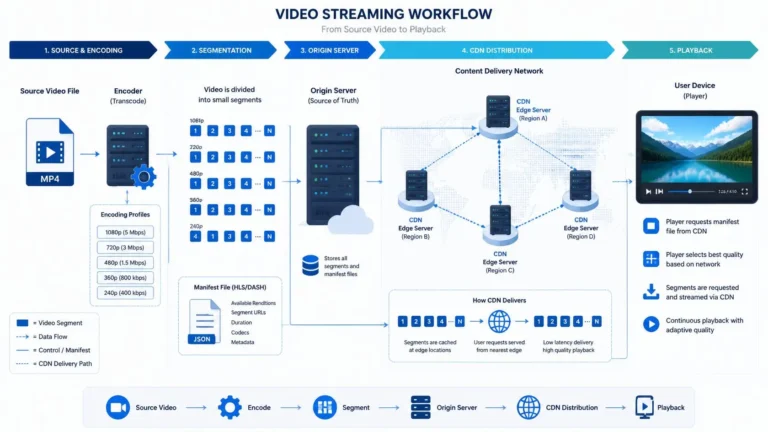
The exact process varies between services and technologies, but the basic sequence is simple.
You select the content you want to watch or listen to. Your browser or app requests the selected media from the service. The service then begins delivering the required data over the network.
Your device receives that data and passes it to the player. Once enough information is available, playback can begin while more data continues to arrive.
The technology behind this process can be quite detailed. Our guide to how streaming works explains the technical process in more detail.
Some streaming systems can also adjust playback quality when network conditions change. Our guide to adaptive bitrate streaming explains how that process works.Our device guides cover those differences in more detail
Can Streaming Be Live or On Demand?
Yes. Streaming can be used for both on-demand content and live broadcasts.
On-demand streaming refers to content that is already available when you choose to watch or listen to it. Movies, recorded programs, music, and podcasts are common examples.
Live streaming takes place while an event or broadcast is happening. The media is produced and delivered while viewers are watching.
MDN describes live streaming as transmitting media live to computers and other devices. Live delivery can use adaptive streaming because network conditions can change during a broadcast.
The main difference is timing. On-demand content is available when requested, while live content is being produced and delivered around the time people watch it.
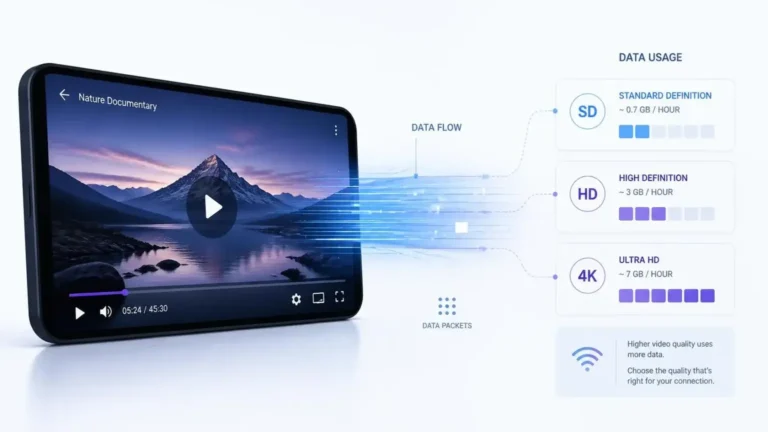
Why Can Streaming Have Different Video Qualities?
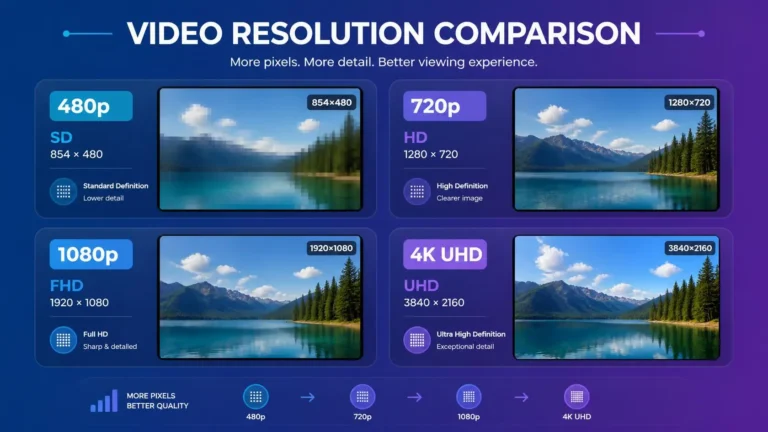
A streaming service may make the same content available at several quality levels, using different resolutions or bitrates.
Some streaming systems can select between these versions as conditions change. For more detail, see our guide to adaptive bitrate streaming.
HLS, or HTTP Live Streaming, is one technology used to deliver media over the web and can provide different versions of a stream for different conditions.
Does Streaming Require the Internet?
Online streaming normally requires a network connection because the media has to be delivered from the service to your device.
That connection might use Wi-Fi, Ethernet, mobile data, or another network connection. The experience can vary depending on the connection, the media being played, and the capabilities of the device.
If you want practical information about connection requirements, see our guide to what internet speed you need for streaming.
Why Does Streaming Sometimes Pause?
Playback can sometimes pause when the player cannot continue receiving the required media normally.
There can be several causes, so a specific troubleshooting guide is more useful than trying to explain every possible interruption here.
If playback repeatedly stops to load more data, see our guide to why streaming keeps buffering.
What Devices Can Be Used for Streaming?
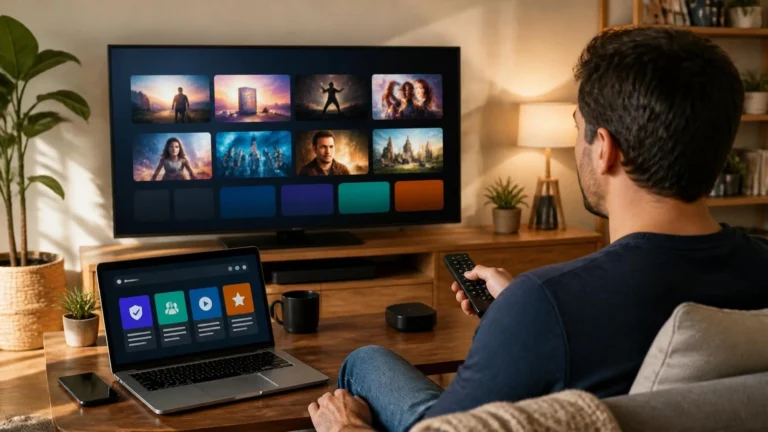
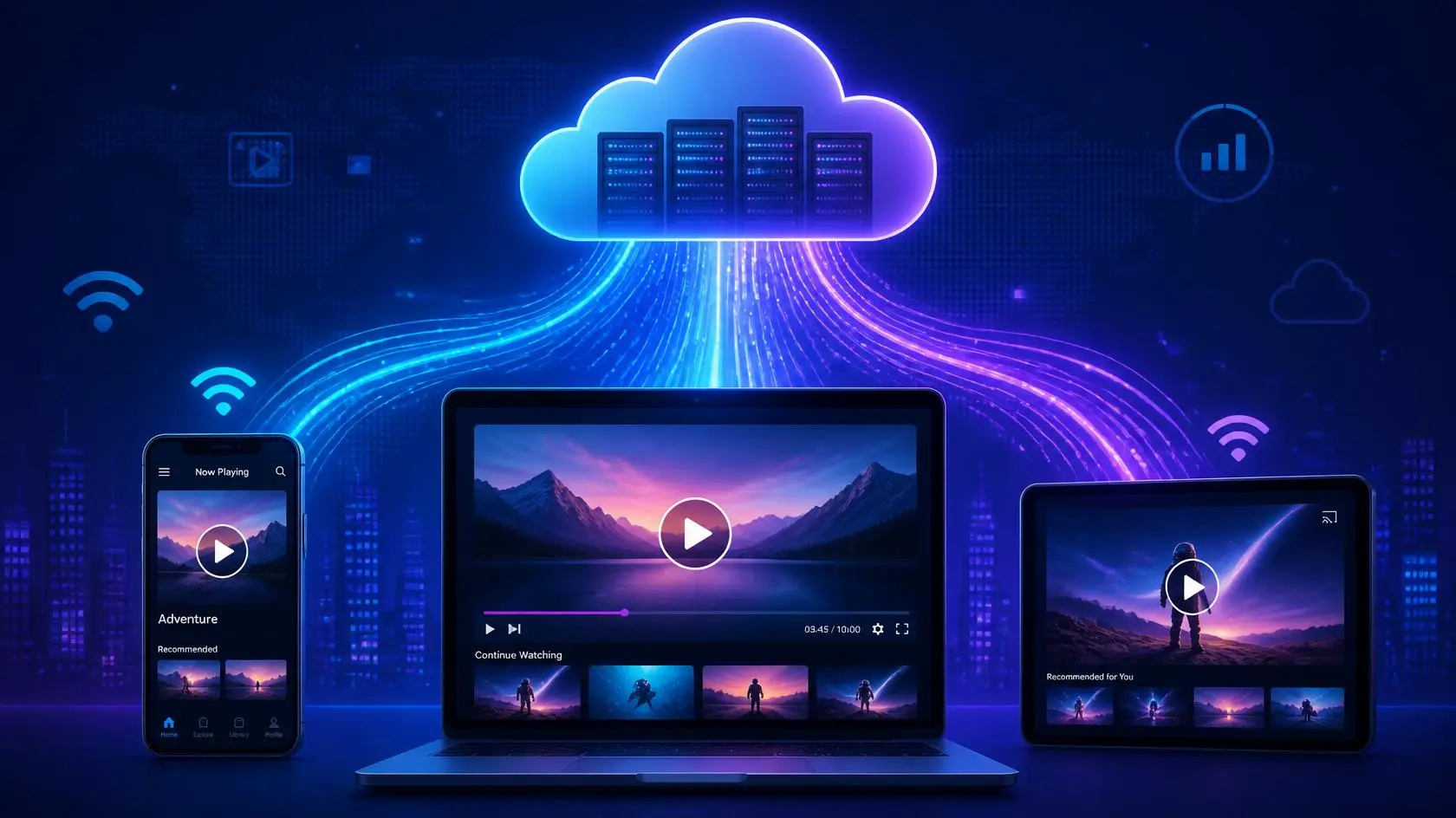
Streaming can work across many connected devices, including computers, laptops, smartphones, tablets, Smart TVs, dedicated streaming devices, and game consoles.
The basic process is similar, but the available apps, connections, displays, audio options, and supported technologies can differ between devices.
Our device guides cover those differences in more detail, while our streaming devices comparison looks at the main device categories side by side.
A Simple Way to Understand Streaming
One useful way to understand what is streaming is to think of it as continuous delivery rather than one large transfer.
Imagine a video as a long sequence of media data. Instead of waiting for the complete sequence to arrive before watching it, your device receives enough data for playback, starts playing it, and continues receiving more.
A simplified view is:
Request content → receive media data → begin playback → receive more data → continue playback
Real streaming systems are more sophisticated than this model. They can use different delivery methods, quality levels, buffering techniques, and media formats.
The simple model is still useful because it explains the central idea without requiring the technical details behind modern streaming systems.
Frequently Asked Questions
What is streaming?
Streaming is a way to deliver digital media over a network so playback can begin while additional media data is still being received.
Is streaming the same as downloading?
No. Both involve transferring data, but streaming is designed around playback while the data is arriving. A traditional download normally stores a complete file for later use.
Can streaming work on different devices?
Yes. Streaming can work on computers, phones, tablets, Smart TVs, dedicated streaming devices, and other compatible hardware. Features can differ between devices.
Why does streaming quality change?
Some streaming systems provide several versions of the same content at different quality levels. A compatible player can switch between those versions when network conditions change.
Does streaming always mean video?
No. Streaming can be used for video, music, podcasts, live broadcasts, and other forms of digital media.
Editorial Note
Understanding what is streaming does not require knowledge of every technology used behind modern media services. This article provides the basic concept, while the site’s more specific guides explain the technical and practical topics separately.
Technical details can vary between streaming services, devices, delivery methods, and playback technologies.
Last reviewed: September 2026